Monday, October 24, 2011

Teen Violence Linked To Heavy Soda Use

Teenage violence can be very deadly.
A new study from the United States shows that teenage violence can be linked to increased soda use. A recent study in Boston shows that high school students who drank more soda during the day were 9-15 percent more likely to engage in violent acts than students who didn't drink soda. "What we found was that there was a strong relationship between how many soft drinks that these inner-city kids consumed and how violent they were, not only in violence against peers but also violence in dating relationships, against siblings," said David Hemenway, a professor at the Harvard School of Public Health.

The study was filled out by 1,878 public school students from ages 14 to 18. The majority were either Hispanic or African-American; few were white or Asian. It was found that many of the students who drank 14 or more cans per week either carried a knife or gun. Students who drank only one or two soft drinks a week were less likely to carry a knife or weapon.

I personally find this crazy... Soft drinks contain no alcohol or drugs, which can lead to the body not functioning properly. The deadliest substance in soda is sugar, which just makes people hyper. I've never heard about sugar causing people to have violent outbreaks against their friends or family. I even drink soda myself occasionally, and the only difference I notice is that I feel gross after consuming so much sugar. I personally don't think this can be true, but with crime rates rising in the U.S., how could it not be?

Tuesday, October 4, 2011

Denmark Now Taxing Foods With Saturated Fat


Don’t you love doughnuts, cookies, butter, milk, oils, pizza, etc? Don’t go to Denmark unless you’ve got extra money for these already expensive delicates. Denmark now enforces a tax on all foods with 2.3 percent or more saturated fat content. When you load up your cart with pizza, milk, cheese and other fatty foods, just be aware you’ll get a surcharge on every single item.

 In 2004, Denmark made it illegal for any foods to have more than 2 percent trans fat. In 2010, the country increased taxes on ice cream, chocolate, and sweets. Only 10 percent of Danes are overweight, so these taxes are obviously working.

 I feel that this is a great idea and the United States should defiantly start enforcing taxes on nasty, fatty foods instead of embracing them. In the United States, over 60 percent of the population is considered obese, which can be a nasty thing. I would really like to see some states creating laws about fatty foods to encourage people to eat smarter and shop smarter. Increasing the price and taxing nasty foods will prevent low-income families from unknowingly purchasing fattening foods.

Thursday, September 29, 2011

Why Marijuana Should Be Legalized


It’s technically legal in sixteen U.S. states to smoke the drug marijuana, but it’s illegal to sell it. Medical marijuana is used to treat glaucoma and other illnesses and is given out in a prescription basis. The problem with this popular drug is that it’s a plant, which is easy to grow and highly valuable. Addicts would stop at nothing to get their hands on this plant. So why should it be legalized for creation and distribution?

 Many thugs have turned to the streets and drug traffic for cash. Marijuana is a main product of this drug trade, which gives many shady characters jobs. Not only is it a job to pay their bills, but many of them live luxurious lives in sports cars and mansions. Something needs to be done about this problem! I believe that if pot was legalized and sold in gas stations, Wal-Mart, and other places that sell tobacco products, that it would take away the drug dealers’ jobs. The United States’ justice system has many loop holes and it doesn’t do any good to throw dealers into jail for a few years, because as soon as they get out, they’ll be selling again.

 The U.S. police and court have enough on their plate already, so taking this crime away would free up some time to worry about the things that matter. The police should be worrying about serial killers and gangs instead of drug traffic. If they legalized marijuana, drug traffic would stop because it would be sold at the local Tom Thumb gas station.

Monday, September 12, 2011

9/11 Leading To Cancer, Lung, and Other Health Problems


World Trade Center in New York City on 9-11-2001
Newest studies show that on September 11, 2001, when terrorists attacked the Twin Towers in New York City, it created toxic gases. Terrorists crashed two commercial airplanes into New York’s World Trade Center, wrecking both enormous buildings to the ground. Some 20,000 firemen, police officers, and other rescue crew ran into the rubble, which will leave them wounded for life.

Aside from 9/11’s some 3,000 casualties, many workers have gathered illnesses, cancers, and have dramatic dreams. One man has to take over 30 pills every day because he was a hero of September 11th (he can be found at this video). I think that this is very sad that heroes have to live the rest of their life affected by this tragedy.

Workers are still working to rebuild a new World Trade Center where the old one fell. Scientists say that the toxic fumes are still around and are dangerous to anyone working on site for any period of time. I think that it was a terrible act that the terrorists from the Middle East did to our nation. It effected more than the 20,000 responders and the 3,000 deaths… Our military services are now deployed to Iraq and Afghanistan ten years later to fight in a war concerning 9/11 and terrorists. Always remember September 11, 2011 and remember why we stop and pause for a moment of silence… God bless America!

Tuesday, September 6, 2011

Florida Teen Has Been Arrested For Impersonating Medical Staff

doctor going to jail
Written by Guest blogger - Ian- On September 4, the Osceola, Florida police arrested a teenager for posing as a staff at the local hospital. He supposedly told hospital officials that he was 23-year-old physician’s assistant student at Nova Southeastern, and he was there to work with the emergency room doctor.


The teen received a hospital badge on August 24th. When he was at the hospital, he interviewed patients, gave physical examinations to nude male patients, gave CPR to a patient in cardiac arrest and restrained an aggravated patient. The teen, Matthew Scheidt, asked multiple times to have his badge upgraded to full access.

When the police interviewed the 17-year-old teen, Scheidt stated that he wasn’t posing as part of the medical staff, and that the hospital was just “covering their butts.” He said he was job-shadowing an emergency room clerk to learn about the hospital’s billing system.

Matthew Scheidt was charged with five counts if impersonating a physician’s assistant, and is being kept at an Orlando, Florida facility for juvenile offenders.

Personally, I think that Matthew Scheidt should be tried and charged as an adult, since he is 17 years old. I believe that he committed this act because he wanted to feel like he was a doctor. Scheidt spent a lot of time earning his hospital badge in August, so I’m curious as to why he went ahead and ruined his career. He will always have “impersonation of medical doctor” on his record, so the likeliness of him being hired by a hospital is slim.

Friday, May 20, 2011

Low Salt diet increases the risk of heart attack?

Now that's a headline that will capture your attention. Ironically it was a recent study published in the May 4 issue of the Journal of the American Medical Association. So dies that mean everything we've read for decades is made up of lies or is it something simpler..... like this study is WRONG. What do you think?

A statement from officials at the Centers for Disease Control and Prevention quickly followed that the study was flawed, and the results should not be applied to the public. In fact, CIDC Medical Director Peter Briss, M.D., commented, "At the moment, this study might need to be taken with a grain of salt." They critcized it in an interview, something they normally do not do.

eat less salt study
The low salt study involved only those without high blood pressure at the start, was observational, considered at best suggestive and not conclusive. It included 3,681 middle-aged Europeans who did not have high blood pressure or cardiovascular disease and followed them for an average of 7.9 years.

The researchers assessed the participants’ sodium consumption at the study’s start and at its conclusion by measuring the amount of sodium excreted in urine over a 24-hour period. All the sodium that is consumed is excreted in urine within a day, so this method is the most precise way to determine sodium consumption.

Lowering salt consumption, Dr. Alderman said, has consequences beyond blood pressure. It also, for example, increases insulin resistance, which can increase the risk of heart disease.

“Diet is a complicated business,” he said. “There are going to be unintended consequences.”

Without going into great detail about this study's shortcomings, one must use this instance as an example of how contradictory study results can be. Nearly every day, food and nutrition makes the news with today's report often contradictory to what you heard last week or last month.

When you read beyond the headlines, a different story often emerges. Nutrition is an evolving science, so we will continue to read conflicting advice.

Keep the following points in mind as you ready your next food and nutrition research findings:

◦Study results are often one piece of a bigger puzzle, so don't make changes in your diet until more studies confirm the results.
◦Check out the study methods looking for longer studies with more people, which will likely produce more valid results.
◦Beware of attention-grabbing headlines that may oversimplify complex research results. Look for bottom-line conclusions at the end of the news story.
◦Don't believe recommendations that promise a quick fix, such as medical miracle. Claims that are too good to be true usually are.
◦Look for research conducted by respectable scientists or organizations and then reported in a reputable publication. Supermarket tabloid publications are not considered reputable!
◦Review research reports for expert interpretation by nutrition and health professionals not involved in the research.

Wednesday, April 6, 2011

The background of alarm fatigue in hospitals

Alarm FatigueBackground of the problem of alarm fatigue

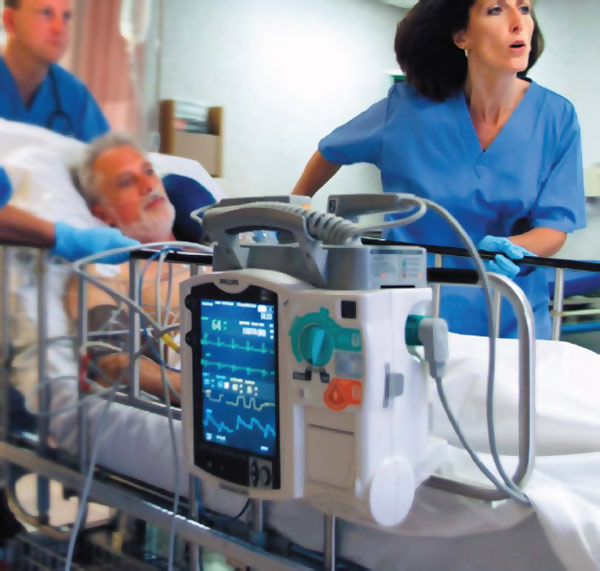
According to the Boston Globe, between 2005 and 2010, more than 200 hospital patients died nationally from an improper response to “patient monitors.” Patient monitors are those machines that keep track of heart function, respiratory rate and other vital signs. Typically, nurses are responsible for watching monitors.

“Alarm fatigue,” a phenomenon where nurses become desensitized to frequent monitor beeping and constant false alarms, may contribute to instances of nursing negligence. A study at Johns Hopkins Hospital in Baltimore revealed 942 critical alarms on one floor, in one day. “That’s one alarm every 91 seconds,” said New York hospital negligence lawyer Michael A. Bottar, Esq., of Bottar Leone, PLLC, a Syracuse based law firm representing patients injured due to hospital mistakes and errors.


“The alarms become background noise,” Bottar said. In one case, a patient who was wheeled into an intensive care unit and connected to a cardiac heart monitor. The leads slipped off and the machine sounded an alarm, but nursing staff did not respond. The patient stopped breathing and died without anyone noticing. At a different hospital, a patient’s heart monitor displayed a flat line for more than two hours because the battery was low. Even though they were checking on the patient, the nurses did not change the battery. The patient suffered a heart attack without anyone knowing, and died.


Nurses work in a loud, busy and often over-stimulating environment. As there are only so many nurses to care for the patient population, when machines are simultaneously emitting a “low-priority alarm (e.g., a low battery) and a “high-priority alarm” (e.g., a cardiac arrest), the high-priority alarms receive greater attention. The low-priority alarms get attention when there is time. But low-priority alarms, such as those indicating low battery power, need attention too. Bottar added, “there is no way to monitor for a heart attack, or low blood sugar, or low oxygen saturation, if the monitor is off.”


In one extreme case, a cardiac monitor blared 19 dangerous arrhythmia alarms for nearly 2 hours before staff silenced the alarms temporarily without treating the patient, who died. In other instances, staff have mis-programmed complicated monitors or forgotten to turn them on.


Southcoast Health System, which manages Tobey Hospital, is hiring nurses and giving them one assignment: responding and monitoring patient monitors. It has also established a policy that monitor batteries must be changed at a certain time each day.


At UMass Memorial Medical Center in Worcester, the hospital wants to eliminate unnecessary monitoring and has implemented new guidelines for when doctors should order cardiac monitoring. Among other changes, nurses are now receiving low-battery warnings about patients on their pagers and cell phones.

As hospitals make these changes, manufacturers are assessing their equipment and working on new "smart monitor" technology. Rather than measure just one symptom, the hope is these new monitors would assess multiple parts of the body before determining whether an alarm needs to sound. For its part, the Food and Drug Administration recently distributed videos about defective medical alarms and proper use to 4,500 hospitals and nursing homes.


“As is frequently the case, the health care industry can learn from the experience of the aviation industry,” Pronovost and Mathews write. “When a major airline wants an aircraft for its fleet, it does not painstakingly assemble it by deciding which seats, control systems, engines, communications systems, oxygen masks and other components to use. The airline does not try to determine the best way for these and hundreds of other components to fit together; rather, it relies on an industry integrator (such as Boeing) to build a low-cost, high-quality aircraft that is safe and meets the needs of its end users. The result is a lower-cost, higher-quality airplane with components that work together. Health care needs a similar systems-integration approach.”


Want to read more about a though process behind the solution?

Thomas J Balkin wrote a great scientific publication discussing this topic titled "The challenges and opportunities of technological approaches to fatigue management" last month.


There are a number of different strategies to mitigate the effects of alarm fatigue in hospital settings. Many are centered on regulatory or organizational approaches, such as work scheduling restriction and employer screening practices. While these generally benefit safety and productivity, there are clearly limitations to these approaches. Technologies that objectively detect or predict operator fatigue may be used to effectively complement or even supplant organizational or regulatory approaches. Over the past decade and a half, there have been considerable advances in relevant technologies, including onboard devices that monitor drivers’ state or level of performance as well as devices that predict fatigue in advance of a work cycle or trip. In this paper, we discuss the challenges and opportunities for technological approaches to fatigue management, beginning with a discussion of the “ideal” system, followed by some of the general issues and limitations of current technologies. We also discuss some of the critical and outstanding issues related to the human interaction with these systems, including user acceptance and compliance. Finally, we discuss future directions in next generation technology for fatigue management.